
:format(png)/f.elconfidencial.com%2Fjournalist%2Ff44%2Faae%2F358%2Ff44aae35831f1c05491bc0305c2ad703.png)
Matacan
By
Andalusians, Catalans and traitors
Just as there is a ‘Stockholm syndrome’, we should consider the possibility of naming the ‘charnego syndrome’
:format(jpg)/f.elconfidencial.com%2Foriginal%2Ff3f%2Ff0f%2Ffa1%2Ff3ff0ffa164b0ce8263071d939d7660a.jpg)
The betrayal of memory is the greatest perversion of the independence movement . The memory of the emigrants who raised that land as cheap labor and who now, fifty or sixty years later, betray their own memory and behave like those bourgeois who one day called them “charnegos”, that term that sounds like cattle . They are the children and grandchildren of Andalusian emigrants , especially Andalusians, who arrived in waves to Catalonia in the last years of Franco’s regime , fleeing the famine to which Franco’s regime had condemned Andalusia. Do you really want to talk about repression, marginalization, prostration? You had to eat and in many towns in Andalusia, even after the cruelty of the post-war period , there was not even a crust of bread.
Eight or ten mouths to feed in a farmhouse where there was only hope of alms. Nearly a million Andalusians emigrated to Catalonia in two decades, between the 1950s and 1960s. Life became so hard at first for those poor people who emigrated to Catalonia in search of bread, that when raids were carried out in the shanties in which they settled to live, they were sent to a ‘destitute classification pavilion’ where they were held and treated like animals, with disinfectant showers and minimum rations of food and water, until the civil governor of turn decreed his expulsion, with the applause of the press and Catalan bourgeois society.
That is the real story and, as such, it should only serve to be remembered, to learn from mistakes , to condemn exploitation, to reject injustices, to demand equality. Never to look back with anger because the only feeling that should be born from such a hard past is pride in having overcome it. It does not happen like that and that is the memory betrayed when in Catalonia you hear children and grandchildren speak of Andalusian emigrants , of those charnegos from the shanties, and instead of reclaiming their roots, they speak with contempt of their land .
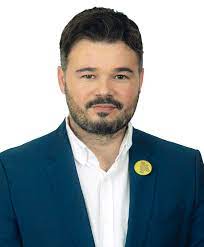
For this reason, in Esquerra Republicana they will have chosen a guy like Gabriel Rufián as their spokesperson , because the Andalusian origin of his family, his faith as a convert, his desire to please and be welcomed by those who despised his origin, make him more aggressive than any other. another independentist with ” eight Catalan surnames .” His last name and his roots are those of so many hundreds of thousands of others: a family of eight brothers who lived poorly in Bobadilla , drowned in the sea of olive trees of the large estates of Jaén . If Rufián has become famous in Congress, it has been because, like no other pro-independence supporter, he speaks “with disgust and hatred,” as he himself says. And because he wants to be the greatest exponent of the triumph of the Catalan independence movement over Spain , the most humiliating: “I am a Charnego and an independentist, here is your defeat and our victory,” as he said in one of his first speeches.
Every time a period of special political tension approaches in Catalonia , every time the independence movement stirs the waters, a controversy arises in which an Andalusian immigrant, or descendant of Andalusian immigrants, speaks out in favor of Catalonia and despises his land. Sometimes it is a video in which a lady, Andalusian by origin, defends the independence movement because “Catalonia has given us the bread we eat”, and other times it is a political leader, such as the mayor of Blanes, Miquel Lupiáñez , who He had his fifteen minutes of glory a few days ago when, on Onda Cero , he said that the difference between Catalonia and the rest of Spain was like that between Denmark and the Maghreb. “The priorities here are different, society is moved more by a spirit of construction, of moving forward, of effort, responsibility and commitment. It’s not that they don’t exist in the rest of Spain, but they are experienced differently. I’m not saying that they rob us or that we work more here, although I don’t consider it fair either.”
There are many other thousands of Andalusian, and non-Andalusian, emigrants who today live in Catalonia and who feel outraged
Miquel Lupiáñez Zapata was born José Miguel Lupiáñez Zapata in the Alpujarra of Granada. At the age of eight, in 1969, the parents of the current mayor of Blanes emigrated to Catalonia because “they couldn’t live, they couldn’t feed me” in a forgotten, underdeveloped and abandoned Alpujarra in those times. How can the poor be blamed for his poverty? Today people no longer emigrate from the Alpujarra to Catalonia because their unemployment levels are similar (at the end of 2016 in Blanes there was 18 percent unemployment , only two points below Narila , where Lupiáñez was born) and the living conditions of The Alpujarra have changed radically thanks to the development and investments that have come with democracy. However, the mayor of Blanes not only keeps in his mind the image of poverty from when his parents emigrated but also blames his land for its abandonment: “The priorities here are different…”.
Equality in Spain , the State of the Autonomies that insults Catalan and independent supporters so much, has managed to reduce the differences , to have roads where before there were only dusty roads, hospitals where the doctor did not come, schools where illiteracy was a circumstance natural. As progress has spread, differences have diminished. But the mentality has not changed because Andalusians are still considered charnegos, another race or another species. “I have been in Andalusia on vacation and the truth is that people work four hours. Most of the time they are at the bar or partying. The streets are always full, I don’t understand it,” says a girl in one of those videos that are emerging in these times of special independence tension in Catalonia.
They have repeated it so much that even the insulted themselves have believed it. I already know that there are many other thousands of Andalusian and non-Andalusian emigrants who today live in Catalonia and who feel outraged, harassed and insulted . But they are not the ones who appear in the videos, but those others who deny their roots and betray their own memory with an invented lie, repeated a thousand times: “Spain steals from us.” Just as there is a ‘Stockholm syndrome’, the possibility of naming the ‘charnego syndrome’ should be considered .
Impetuous lady: “Catalonia has given us the bread we eat.”
Do not bite the hand that feeds you. There is no saying more servile, more doglike.
Absolute respect for any ideology that abides by the basic principles contained in the Constitution and absolute contempt for those who twist and pervert the memory of their people. They are not converts, they are traitors.