

Josep Maria Pou: “I have been made to feel bad Catalan for not agreeing with the process”
The final interview
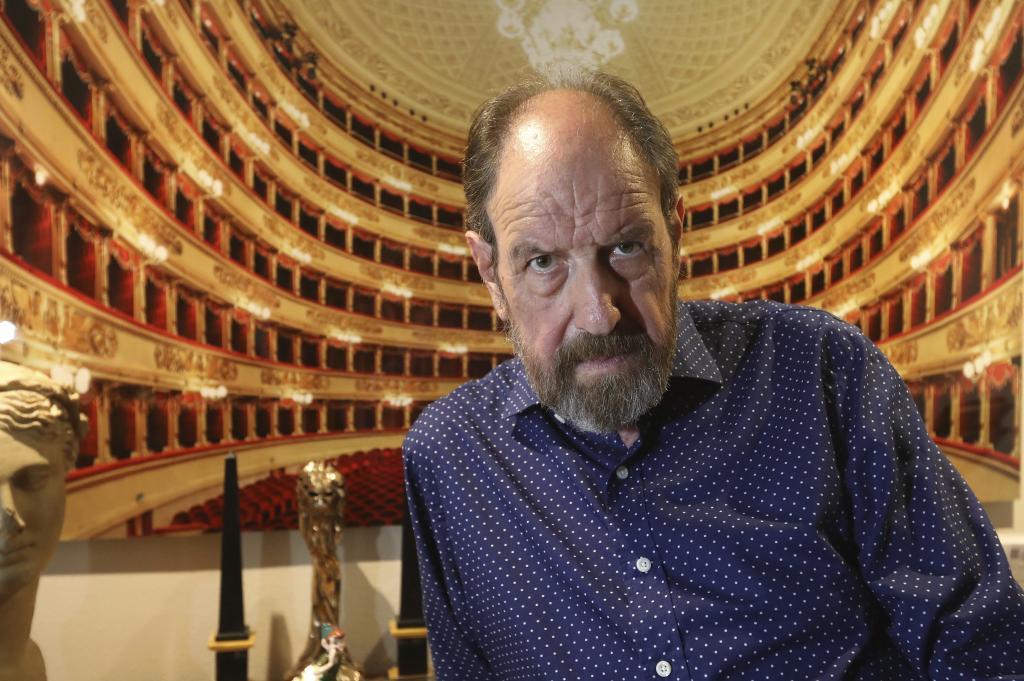
JOSEP MARÍA POU . Mollet del Vallès, Barcelona, 1944. One of the greats celebrates 50 years of acting and does so with double success: The Kingdom premieres tomorrow after an avalanche of praise in San Sebastián and Moby Dick fills up and fills up. He wants to retire, but they won’t let him.
- This fall you celebrate 50 years of career. Do you remember your first day?
- Perfectly. On October 2, 1968, I stepped on stage for the first time as a professional actor with a salary and contract. And it wasn’t just any night. It was on a stage like the Spanish Theater in Madrid and with a premiere that was revolutionary in its time: the Marat-Sade directed by Adolfo Marsillach and marked a before and after in Spanish theater. In form and content. It was the first time that a politically committed and revolutionary text was released during the Franco regime.
- Is remembering this well memory or nostalgia?
- If nostalgia is that any past time was better, I’m not that at all. No matter how much a great poet like Jorge Manrique wrote it, it is a negative and conservative thought, a brake on too many things. I believe what a Frank Sinatra song says: that the best is yet to come. I’m not nostalgic, but I have memory. I perfectly remember those 50 years of career step by step, the good moments and the bad, which are few. Because I have had the good fortune to always be working. Although I am a little embarrassed to say it at this social and work moment, I have not been unemployed for a single day in those 50 years. I feel tremendously lucky and privileged.
- And about to turn 74, after having worked 50 non-stop and with life resolved, aren’t you tempted to slow down and live life?
- Yes, yes, I have every temptation. Not just to reduce my work pace, which is stronger than ever, but to retire completely. That’s my wish. I have recently read interviews with two actresses whom I love and admire, such as Concha Velasco, whom I hope will recover quickly, and Lola Herrera, and both say that they really need to continue doing theater and that they never plan to give up. And I understand them, but it is not my case. Every time I go out to work I think that I would be better off at home reading or scratching my belly. And I already deserve it. Getting up one morning and thinking “I have nothing to do”, being the owner of your time. That must be wonderful. So yeah, I’m thinking about quitting. With Moby Dick I have a tour signed until June 2019 and I often think that it will be my last show. I don’t know for sure, but it could be. The same thing always happens to me, I hire myself to do a number of small shows, I think I’ll pay it off in two months, and then I find myself on tour for two years.
- Don’t you know how to say no?
- Once I release a show, I feel responsible for it and if there is demand, I am not able to leave it. How am I going to leave the theaters, the public and the company without a good and successful show because Mr. Pou wants to scratch his belly? I am incapable. It is a condemnation and a satisfaction because, at this age, the prizes are the good characters.
- Like Ahab, is he still chasing his white whale? Is there a character that you are obsessed with and haven’t been able to play?
- There are some characters that were my dream as an actor and have slipped through my fingers like sand. I would have given my life to play Cyrano de Bergerac, Willy Loman in Death of a Salesman and Professor Higgins in Pygmalion and My Fair Lady . I will always regret not having done them.
- And your favorite of the ones you have done?
- King Lear is the greatest character an actor can face. For the English he is like Everest. And normally actors wait until the end of their career to play him, because he is a damn character who is an 80-year-old man, but he demands from the actor an amount of energy that at that age you no longer have. You have to play it earlier, between the ages of 50 and 60, when you still have enough energy to support the weight of a role like that. I was lucky enough to do it at that age and it changed my career: starting with King Lear, I am a different kind of actor and person. When you finish playing a character like that you come out transformed. That’s the miracle of those characters, you don’t come out of them unscathed. Your characters make up your life. They change your character and personality. I am the Josep María Pou that I am because of the characters I have played.
- And what Pou is that?
- One for whom being an actor has made him a better person. If you are not an insensitive piece of wood, if you are a sponge, this job gives you more chances of being a great person than almost any other. Because you constantly put yourself in very different places to play a character, and living in those other people and experiences helps you discover a lot of things about yourself that you wouldn’t otherwise discover. Transforming yourself into others transforms you.
- ‘The kingdom’ enters into the issue of political corruption. Is the civil war of our time going to be the reference topic when making fiction about these years?
- Yes, if we had to summarize the last 20 years in Spain, corruption would be the main disease of Spanish society. Not only politics, but it is a sadly common evil throughout society. It is a temptation that is within reach and many people succumb. We are not sick with the bite like in some Latin American countries, but we cannot think that it is just a matter of politics. What happens is that in politics it is especially unforgivable and frequent.
- What do you attribute it to?
- There are recent generations that seem to approach politics with more desire to make a profit than to serve. We have politicians who are not morally and ethically prepared to resist all those temptations that will arise along the way. It is a problem of weakness. The best no longer approach politics. There is a lack of category and we are seeing it at the childish level of parliamentary debates whose ultimate purpose is to screw up and confuse, not to build and govern. People approach with spurious interests that they themselves are not aware of due to lack of life experience. They often give themselves away with a simple two-line tweet. It’s very general, unfortunately.
- Is Spain especially kind to corruption?
- Clear. The person sitting next to you boasts that he gets all the invoices without VAT. A few weeks ago I had to make some payments for a work that depended on me and, as soon as I approached to pay the invoice, they offered me to do it without VAT. And with all the normality in the world, without even lowering your voice or taking you to the back room to hide. So I assume they do it all the time. What happens is that the character of the Spanish has always been very lax in matters of morals and laws. Everyone has boasted about being brave to defy the laws until a time has come when it has been taken as normal, and it shouldn’t be.
- Is theater undervalued in the panorama of Spanish culture?
- I answer you with the cliché “I’m glad you asked me that question.” The theater does not have the impact proportional to its success, because it seems like the little brother of film and television, but the shows fill up. And I often go to the movies and there are two or three people in the room. That doesn’t happen in the theater. I see that cultural information is increasingly mixed with that of social life, sometimes they are not even distinguished, and theater has not entered that game. Anything that happens around the world of film and television has a place in the media because it is considered to be part of the world of showbiz, which is a very poorly chosen term. It makes my hair stand on end every time I hear those who talk about Big Brother VIP refer to the participants as “showbiz people.” It makes me want to shout “son of a bitch” at the screen, sorry. Showbiz is a sacred word, it is the people who are part of the great family of actors, not those who live by night.
- You have positioned yourself in favor of Lluís Pasqual, in the case that ended with his exit from the Teatre Lliure.
- Yes. In the case of Pascual, beyond his temperament, which I do not know because I have not worked with him, it makes me immensely sad how the situation has developed with a person of enormous importance in Spanish theater and who deserved an end. much more dignified and bigger. I am deeply sorry for him and for my job.
- It all started with an actress’s accusation of harassing her during rehearsals. This blurred boundary between demand and despotism in the world of artistic creation is a delicate and common topic. Is that toughness necessary to achieve the most?
- Despotism is a very ugly word, let’s say authority. The creator must have the authority of him. In my 50 years of career I have encountered very tough and demanding directors, who shouted a lot and made the actors very nervous, and others who went smoothly. Sometimes, a shout at time is not so much abuse as a tool that actor and director tacitly agree on to provoke reactions and discover things. The director has the right to use those mechanisms up to a point. But I have directed 12 functions and I have not screamed in my life. Maybe because I’m an actor…
- Is more attention paid to theater in Barcelona than in Madrid?
- Yes, although Madrid in recent years has gained a lot of ground with the Teatro del Barrio, Alberto San Juan, Andrés Lima. Miguel del Arco… He has become very dynamic. Barcelona was always much more active and generated more authors and directors. In Madrid there is still too much repertory theater from the 50s, I don’t know if due to lack of knowledge or laziness.
- How has the ‘process’ affected Catalan culture?
- There is an obvious stoppage. And the most serious thing is that this decrease in activity has also translated into a decrease in public attendance. The first quarter of last season, which coincided with those dates of 1-O, only the four Focus theaters in the city lost 24,000 spectators. If you add the rest… It’s dramatic. The public radically stopped going to the theater, paying only attention to the political life of the country. In Catalonia there is a state of anguish, uncertainty and restlessness that does not encourage anyone to go to the theater, to dinner or whatever. Culture in Barcelona is paying a very high toll for the process .
- They have named him ‘Catalan of the year’ in the most complicated year in the recent history of Catalonia…
- What are you going to tell me… I thought I was on the list to fill out, never in my life have I been so sure that I wasn’t going to win a prize, that’s why I got excited like few other times. And I especially appreciate it because it has been a year in which I have been made to feel like I am a bad Catalan because I did not agree with how the process was being carried out or with many of the things that have been done in its name. It does not mean that I do not agree with the desire to rethink some things about the relationship with Spain, since all peoples have the right to review their relations, but obviously I do not agree with acting outside the law.
- Is Catalan society as divided as it often seems from the outside?
- In the last two years, a climate of confrontation and two teams have been created: them and the bad guys. And that affects any family or group, but that climate does not exist on the street. I watch television channels in which it seems that in Catalonia we are giving each other hell from the moment we go to buy bread in the morning until dinner time, and it is not true. From the outside, this is exaggerated, daily life has not changed that much. The problem is that Catalonia now lives in the realm of emotions instead of reason, and that is bad. What does happen and is sad is that, to avoid conflict with someone who you know is more or less hotheaded, you avoid the conversation. There is self-censorship with topics that, for two years, it is better not to talk about. And that bothers me a lot and affects my personal life.
- In his opinion columns in ‘El Periódico’ he has not hidden…
- They insult me a lot on the internet, from son of a bitch and traitor on up, as soon as I make the slightest reference to my displeasure with how the matter is being handled, but it is what it is. In any case, now I am somewhat more optimistic, I notice a certain change in forms and procedures. It seems to me that the independence leaders are coming down to reality after a few years living in the clouds, from where they have deceived and lied to many citizens. Something that they now recognize by speaking, like Mr. Puigdemont, of terms of 20 years. Oh, how long you trust me… In any case, I’m glad they’re going ashore.
- Do you see a negotiated and immediate solution as feasible?
- I have enormous hopes that a point of confluence will be found through the best weapon that the people have: well-exercised politics, which is the art of good relationships. As soon as intelligent politics and not voting politics are applied, it will be solved and I think it will be in a reasonably short period of time. The tense climate is improving. This Government is more sensitive and the independence movement is assuming that it is not going to become independent from this. He begins to understand that he has acted as if he had a fever of 40 degrees, in which it seemed that everything was very easy… and it is not.