

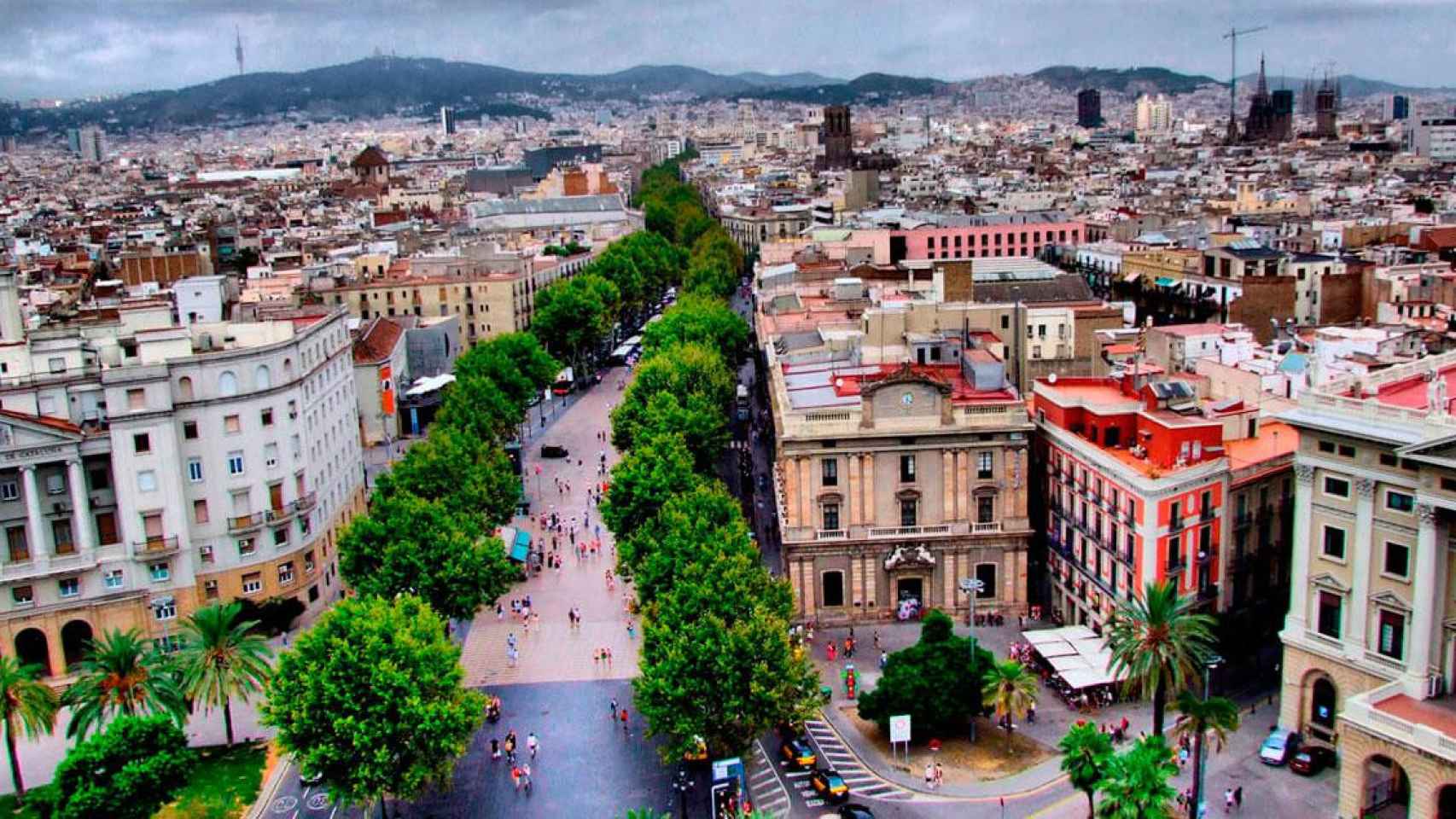
Las Ramblas in Barcelona, where there is no shortage of modernist mansions with a past linked to the colonialism of Catalonia in America / Cedida
The English press echoes Catalonia’s slave past
‘The Guardian’ points out in a report how industrialists and sailors in the region became rich with human trafficking even after its prohibition in the 19th century.
March 14, 2023 17:50
This is the case of The Guardian , which under the title ” Catalonia faces the racism of the past after a documentary on the slave trade ” dedicates an extensive report to the issue. All of this, as a result of the commotion caused by the broadcast on TV3 of the documentary Negrers: La Catalunya Esclavista . A program that has recalled some episodes often silenced by native historiography.
Slave trade even after its prohibition in the 19th century
“The government of Catalonia has said the wealthy Spanish region must confront ‘past racism’ from its slave trade history, after a documentary revealed how Catalan industrialists and sailors profited from the transatlantic slave trade when the British abolished the practice in 1807 ,” notes the British newspaper, surprised that people continued to be trafficked from Catalonia during the 19th century .
“It has long been recognized that many Catalan fortunes, including that of Antonio Gaudí’s patron Eusebi Güell, were made through slave labor on the tobacco, sugar and cotton plantations of Cuba and, to a lesser extent, Puerto Rico. Much “Less known is the fact that Catalan magnates and sailors spent decades enriching themselves from slavery after filling the void left by Britain’s decision to abolish slavery and exit the trade,” adds The Guardian .
700,000 victims in just half a century
The English newspaper highlights that the television documentary “sheds light on what historians have been demonstrating for decades: that between 1817 and 1867, Catalans were directly or indirectly involved in the transportation of 700,000 slaves from West Africa to the Caribbean and that the trade financed much of the industrialization of Catalonia and the construction boom of the 19th century in Barcelona.
Likewise, the newspaper also collects the testimonies of people who regret that Catalan nationalism has tried to offer a partial and sweetened vision of the history of Catalonia, as well as how badly this documentary has gone down among its supporters. This is the case of PSC deputy Beatriz Silva, who points out how Catalanism has traditionally tried to make people believe that this colonial past played a residual role: “I think that the majority of Catalans believe that it is time to deal with this, but The nationalist reaction to the documentary on social networks has been hostile ,” he states. “ The problem with nationalism is this claim that we have always been the good guys .” There are no people who are always the good guys,” recalls the deputy.
From the supremacism of Pujol and Torra to the slaver great-great-grandfather of Mas
The Guardian also echoes the supremacism of prominent nationalist leaders such as the former president of the Generalitat Quim Torra (JxCat), who is remembered for his insulting xenophobic writings against Spain and the Spanish. And it is also remembered how his predecessor Jordi Pujol, at the head of the Government for almost a quarter of a century (1980-2003), called Andalusians “incoherent and anarchic” in some of her writings.
The newspaper also points out that “when Cuba abolished slavery in 1886 and eventually achieved independence from Spain, many of those who had made their fortune there, known as indianos , returned to Catalonia and invested part of their wealth in the fabulous modernist mansions. of Barcelona and the coastal towns, such as Sitges and Vilassar de Mar”. In this sense, it is noted that the former president of the Generalitat Artur Mas also had a great-great-grandfather who “was an important actor in the slave trade . “